Nexon: UX Audit

I wanted to refine Nexon’s relatively new game launcher from a UX perspective, further creating ease of use and reducing friction from launch to playtime.

Gaming UX Audit Accessibility
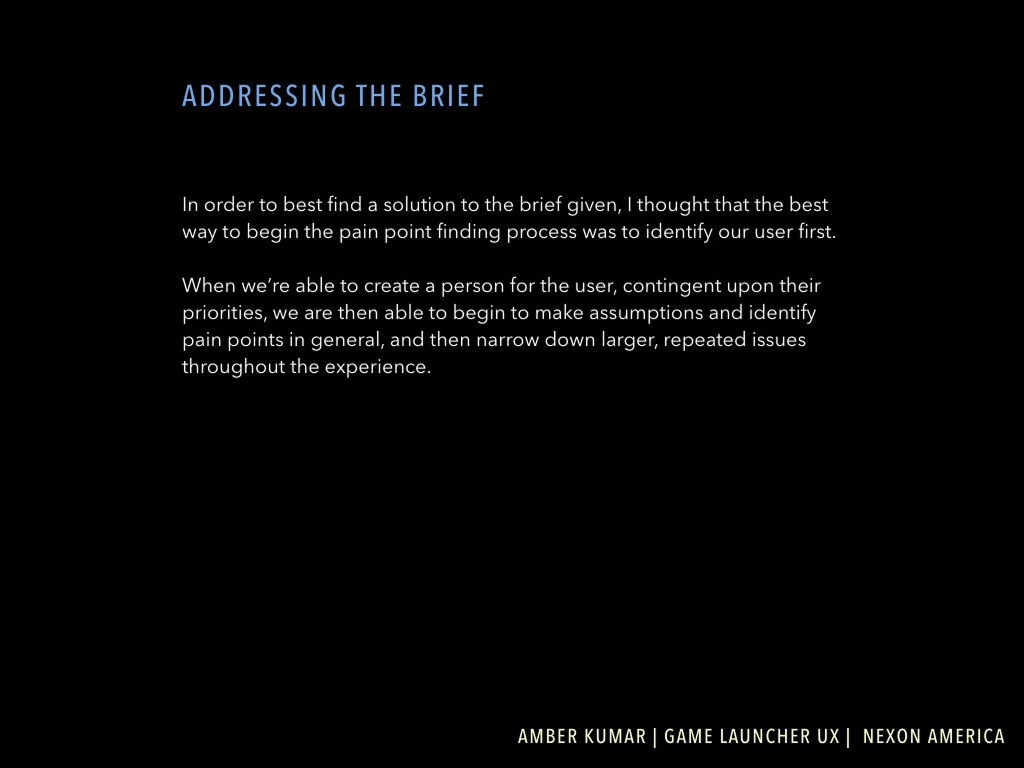
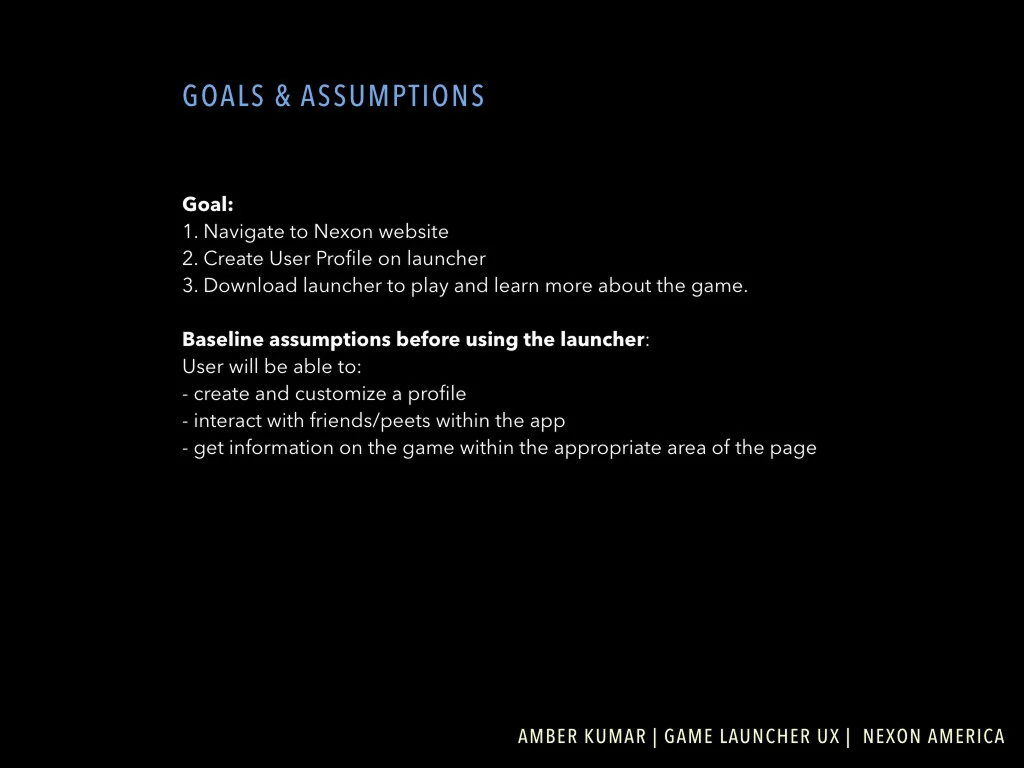
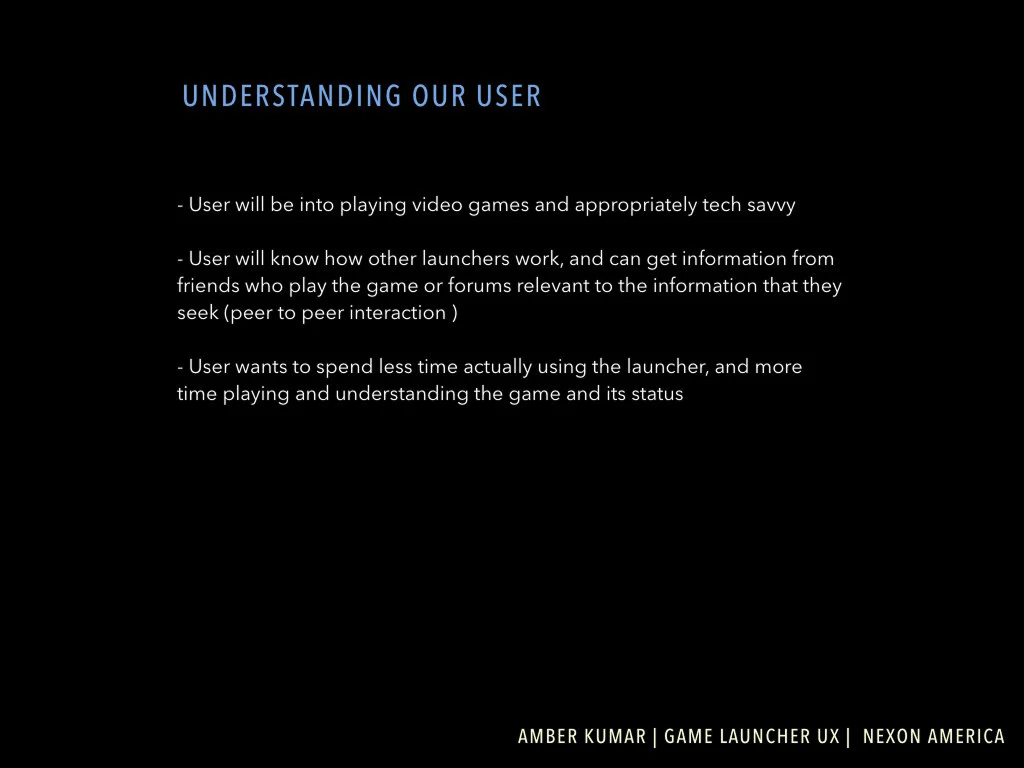
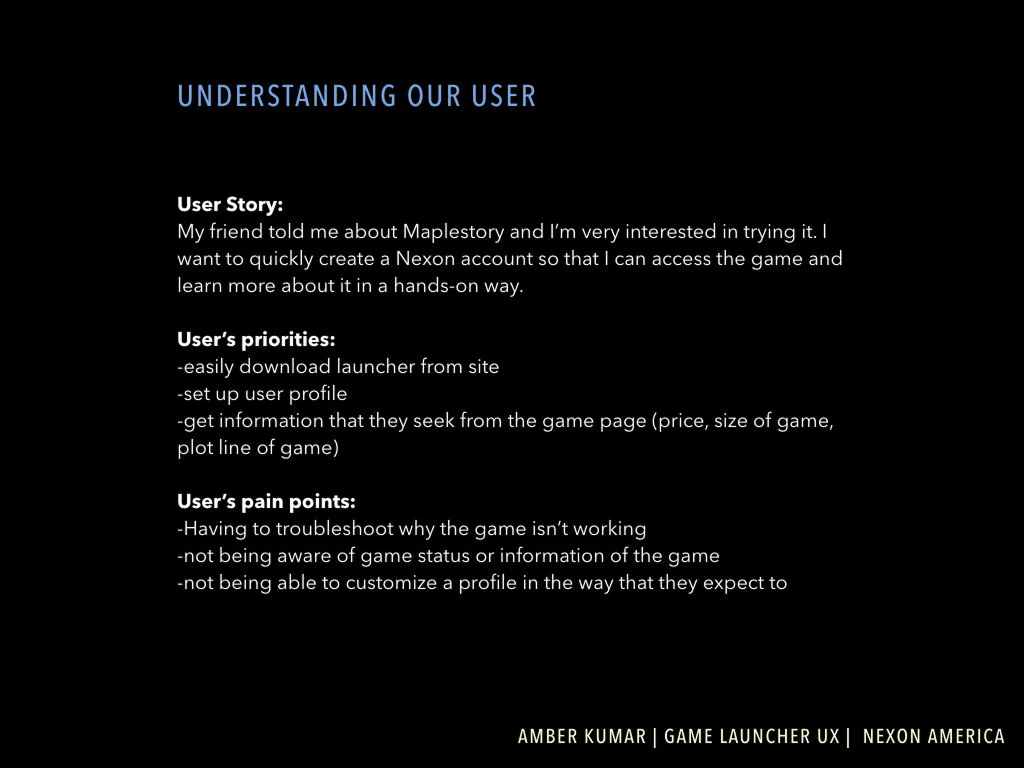
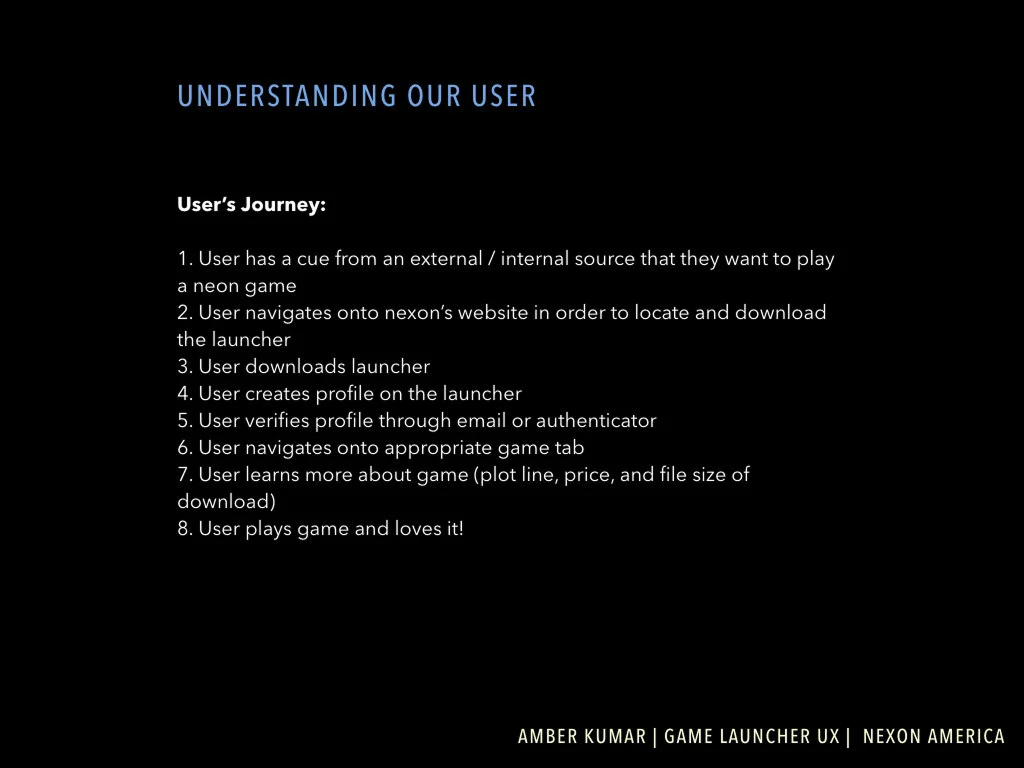
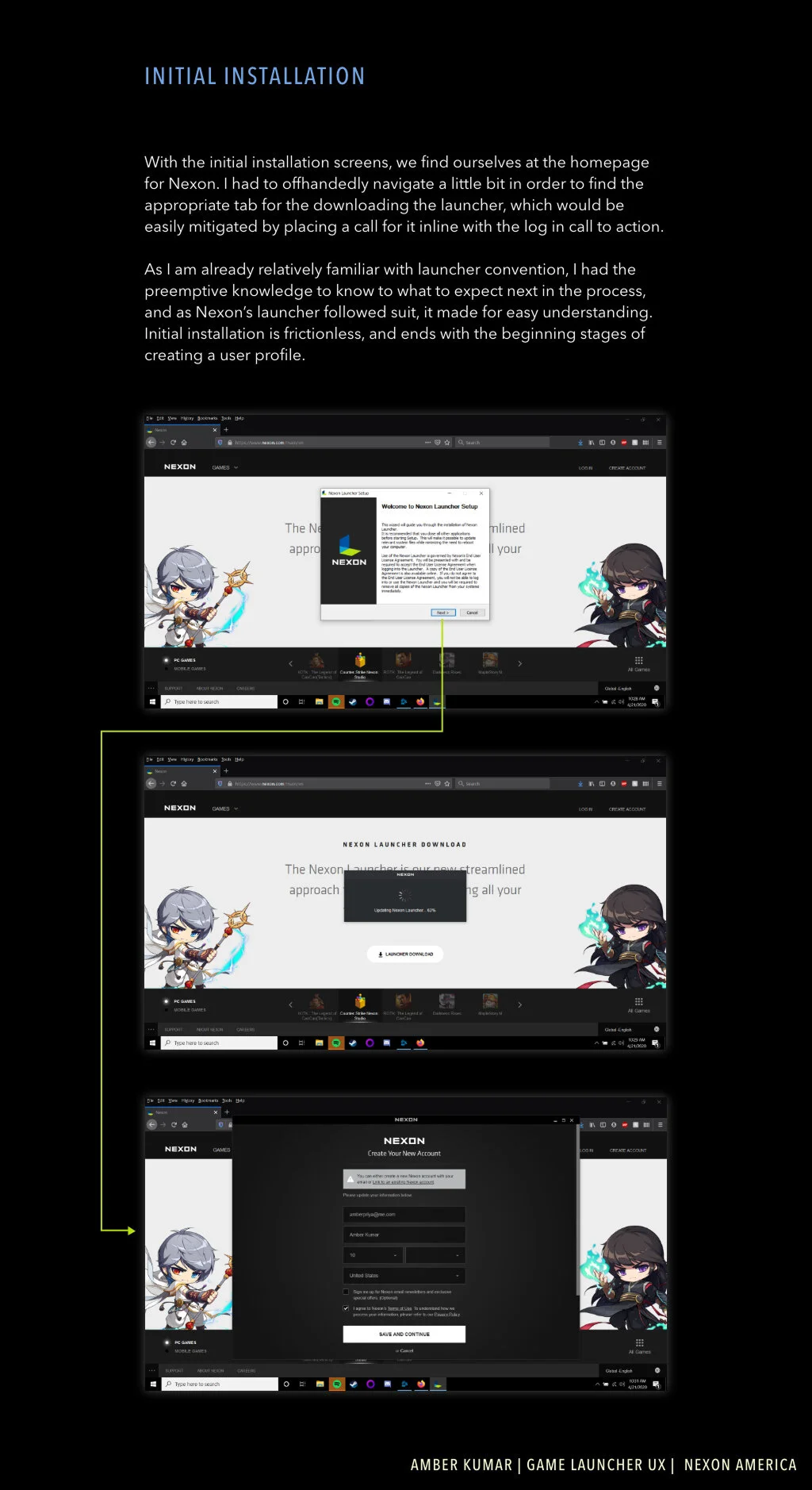
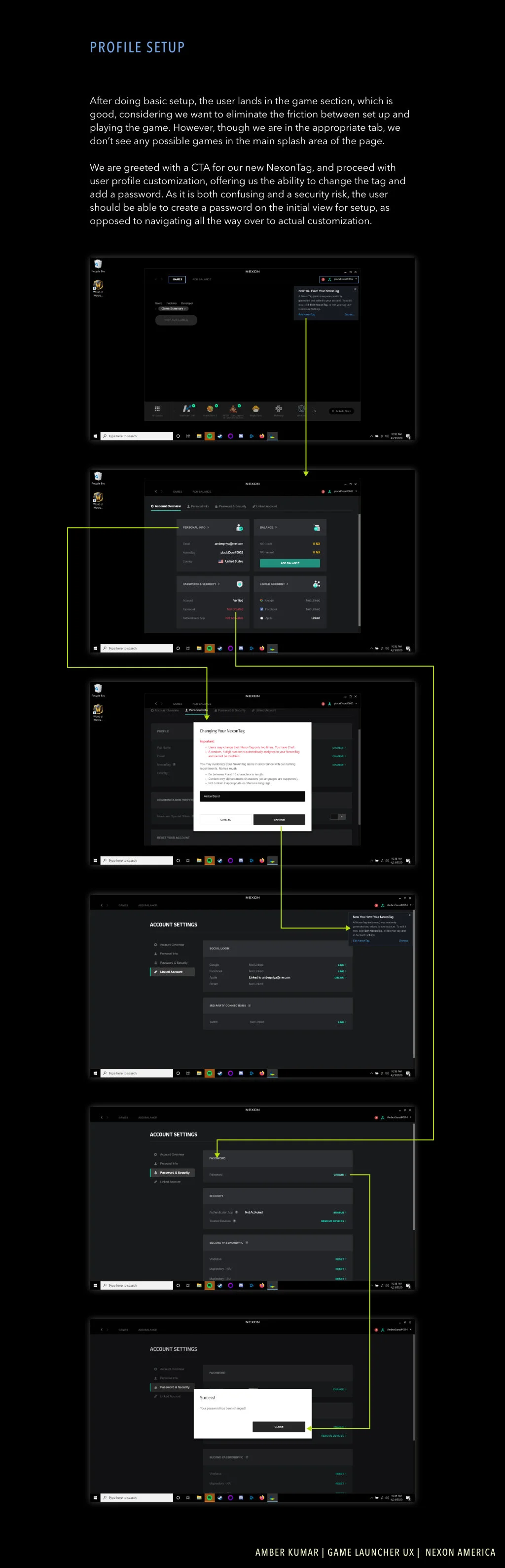
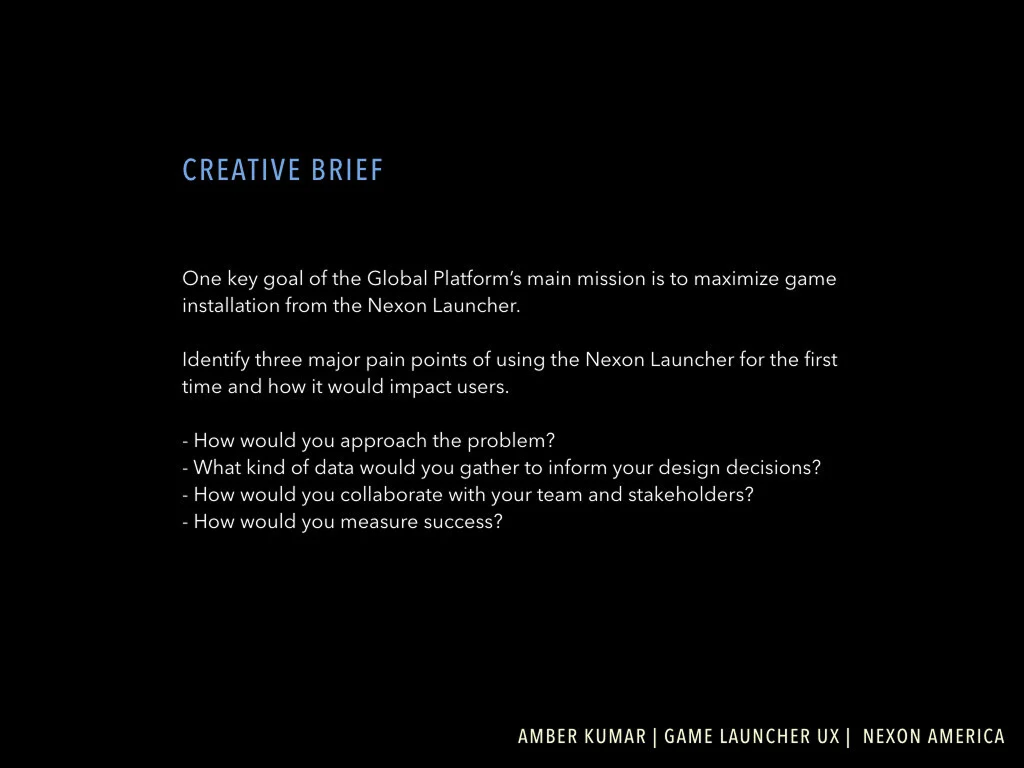
Slide titled ‘Creative Brief.’ Text reads: ‘One key goal of the Global Platform’s main mission is to maximize game installation from the Nexon Launcher. Identify three major pain points of using the Nexon Launcher for the first time and how it would impact users. – How would you approach the problem? – What kind of data would you gather to inform your design decisions? – How would you collaborate with your team and stakeholders? – How would you measure success?’ Slide titled ‘Addressing the Brief.’ Text explains identifying the user first to define pain points and assumptions, and narrowing repeated issues across the experience. Slide titled ‘Goals & Assumptions.’ Text outlines the goal: 1) Navigate to Nexon website, 2) Create user profile, 3) Download launcher to play and learn about the game. Baseline assumptions include creating and customizing a profile, interacting with friends or peers, and accessing game information. Slide titled ‘Understanding Our User.’ Bullet points describe the user as someone who plays video games, is tech-savvy, understands other launchers, learns from peer recommendations, and wants to reduce time troubleshooting and spend more time playing. Slide titled ‘Understanding Our User.’ Includes a user story about discovering Maplestory and wanting to try it quickly. Lists user priorities such as downloading the launcher, creating a profile, and getting key game information. Lists user pain points including troubleshooting issues, lack of game status visibility, and limited profile customization. Slide titled ‘User’s Journey.’ Lists an eight-step flow: learning about the game, visiting the Nexon site, downloading the launcher, creating a profile, verifying it, navigating to the game tab, reading game details, and playing the game. Slide titled ‘Initial Installation.’ Text describes navigating Nexon’s homepage, locating the download tab, and beginning setup. Three connected screenshots show Nexon homepage, a ‘Welcome to Nexon Launcher Setup’ pop-up, an ‘Updating Nexon Launcher’ progress window, and a ‘Create Your New Account’ form with arrows showing progression. Slide titled ‘Profile Setup.’ Text discusses friction in profile customization and NexonTag editing. UI screenshots show the launcher game tab, account overview, NexonTag change modal, tooltip with naming rules, password/recovery settings, and a confirmation dialog, arranged with arrows indicating flow. Slide titled ‘Home Navigation.’ Text critiques confusing navigation between PC and mobile games, unclear ‘N’ icons on tiles, and browser redirects. Screens include a grid of game categories, a KartRider detail page, and a Nexon Support Center search page with arrows showing navigation. Slide titled ‘Game Page and Information.’ Text notes missing game title visibility, ambiguous pricing cues, and contrast issues. Screenshots show a game splash page with ‘Play Now’ CTAs, a Game Summary page, and full-screen promotional artwork with arrows illustrating steps. Slide titled ‘Identifying Pain Points.’ Bullet points highlight information architecture issues, inconsistent user validation, and broken UX patterns, noting resulting friction, discouragement, and poor retention. Slide titled ‘Approaching the Problem.’ Text proposes refining IA, creating a style and interaction guide, improving validation, researching demographics, comparing competitors like Steam and Battlenet, and collecting surveys/focus groups data. Slide titled ‘Measuring Success.’ Text explains tracking usability, validation, workflow, demographic alignment, and metrics such as acquisition, activation, retention, referral, and revenue, noting post-redesign retention spikes as success signals. Slide titled ‘Current vs Ideals.’ Diagram compares current steps (finding the launcher, downloads, profile setup, password change, navigation, play) against a streamlined ideal flow that removes non-core steps.